
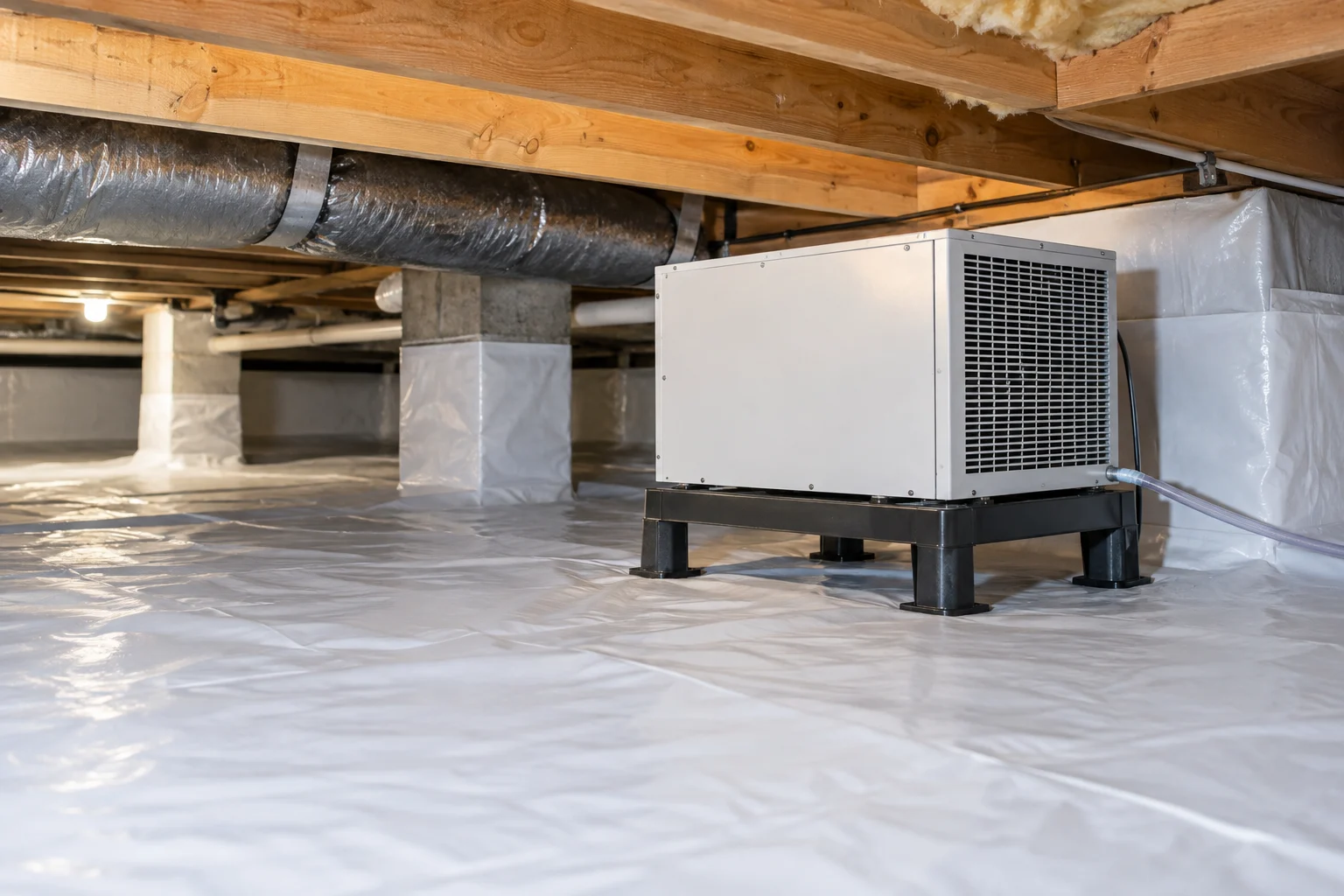
Read humidity with temperature
Relative humidity describes how close air is to saturation at its current temperature. The reading can rise when air cools even without new moisture entering. Dew point is the temperature at which that air would begin to condense on a surface.
This is why cool ducts may sweat in warm, humid weather. Assessment needs the air conditions and the affected surface, along with the source of moisture. A single humidity percentage cannot explain every damp crawlspace.
Size for the load and operating conditions
Floor area is a starting point, not the whole selection. Ground exposure, outside-air leakage, crawlspace height and layout, water sources, and operating temperature affect what the unit must remove. Published removal capacities apply at stated test conditions; compare equipment on the same basis.
A machine that runs for long periods may be responding to a large moisture load, restricted airflow, a control issue, or a drainage problem. Replacement should follow that investigation rather than automatically increasing capacity.
Give the air a path through the equipment
The inlet and discharge need clearance. Piers, foundation divisions, and narrow connecting openings can leave sections poorly served even when the area near the unit is dry. Placement or manufacturer-approved ducting should address those zones.
Service clearance is part of the layout: someone must be able to remove a filter, access controls, inspect the drain, and replace the equipment. The proposal should identify the model and installation arrangement instead of treating the unit as a box added at the end.
Route the collected water deliberately
A dehumidifier collects moisture as liquid condensate. Its drain needs a suitable destination and a route that follows the equipment instructions. Where gravity drainage cannot work, a condensate pump may be needed. Elevation, tubing support, and access for blockage checks affect reliability.
Electrical provision and any additional trade work should be clear before installation. A dehumidifier is not a substitute for repairing a leak or intercepting incoming groundwater.
Set controls and verify the whole space
Completion should include the selected control setting, operation, airflow, and a condensate-drain check. Compare later readings in representative areas, rather than relying only on the sensor next to the machine.
Discuss initial drying, expected seasonal operation, filter care, drain inspection, and any alarm or monitoring features actually included. Maintenance intervals follow the selected equipment and site conditions; the quote should identify who is responsible.
COMMON QUESTIONS
Technical questions, explained.
What humidity number should I use?
The operating target should account for the space, equipment, and condensation risk. Air temperature and cold surfaces matter along with relative humidity. The installed setting should be explained rather than presented as a universal guarantee.
Will a portable household unit work?
Suitability depends on temperature range, capacity under operating conditions, airflow, drainage, and service access. Compare those requirements with the model instructions before assuming a portable unit is equivalent to a crawlspace installation.
Why is the unit running but the crawlspace still damp?
Check moisture sources, enclosure gaps, air circulation, filters, drain operation, and sensor location. Damp materials may also lag behind improving air conditions. Runtime alone cannot identify the fault.
Does a dehumidifier bring in fresh air?
A recirculating dehumidifier removes moisture from the air it processes. It does not automatically provide ventilation or soil-gas mitigation. Those functions need their own design when required.