
Decide where the thermal boundary belongs
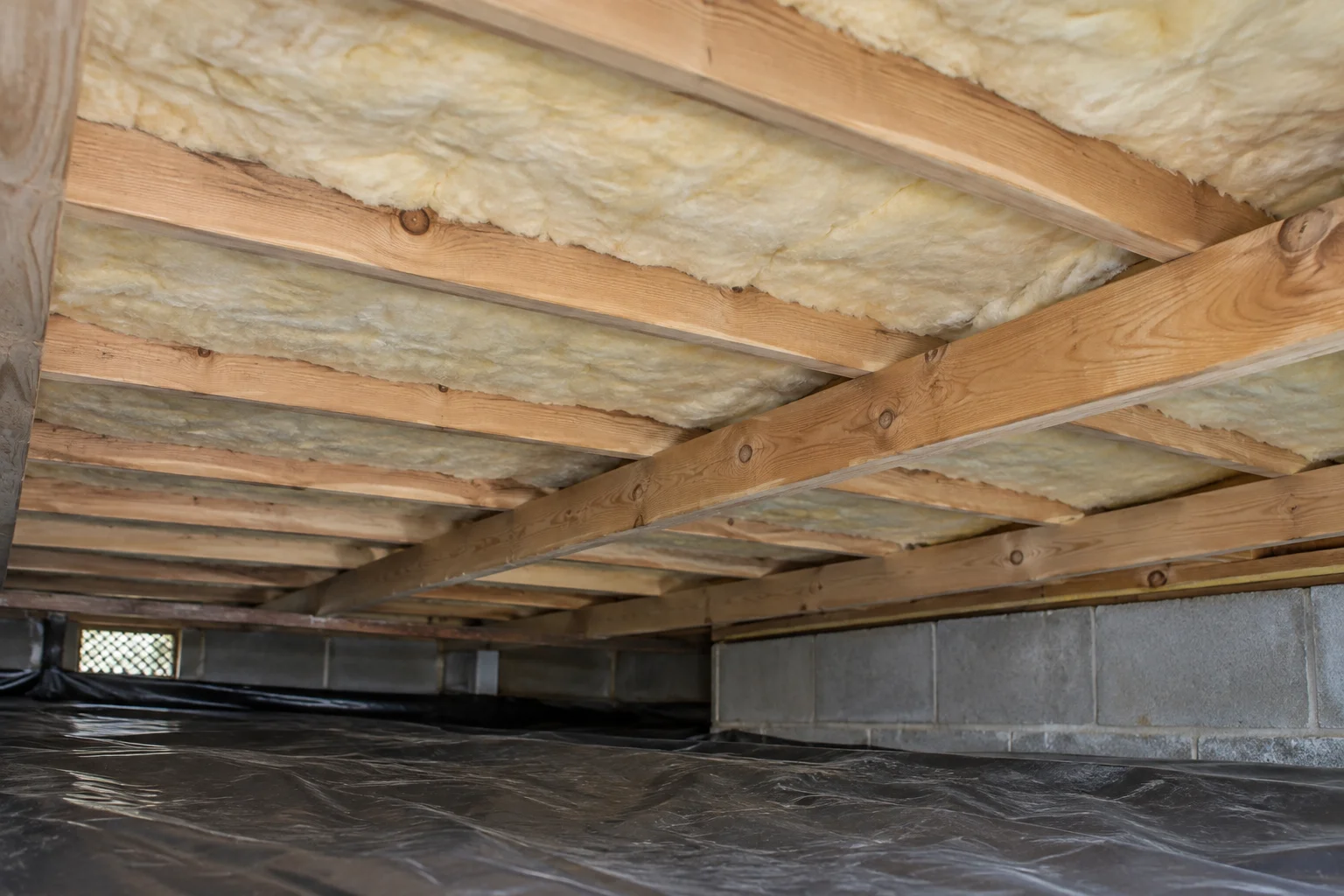
In a vented crawlspace, the floor above commonly forms the thermal boundary. In an enclosed design, that boundary may move to the foundation walls and rim area. Insulation location therefore follows the enclosure design rather than a preference for one material.
The proposal should identify the intended assembly and explain how adjacent sections connect. Partial changes can leave discontinuities where outside air or heat bypasses the new insulation.
Building America Solution Center: unvented, insulated crawlspaces ↗
Investigate wet or fallen material first
Sagging batts, staining, condensation, and exposed gaps can point to support problems, moisture exposure, or other defects. Replacing insulation without identifying why it failed risks repeating the same condition.
Removal may expose framing or connections that could not previously be assessed. Define the removal scope and the process for discussing newly visible damage. Enclosure and insulation should not conceal an unresolved leak or deteriorated structure.
Separate air control from thermal resistance
Insulation slows heat flow; air sealing addresses leakage through openings and joints. Some products can perform both roles only when installed as a complete, correctly detailed assembly. Filling a cavity does not automatically seal its perimeter.
Rim areas, penetrations, access doors, and transitions deserve specific details. Material selection should account for moisture exposure, attachment, required thermal performance, and the manufacturer’s approved use.
Preserve inspection and equipment requirements
Wall and rim treatments must coordinate with termite inspection provisions, fire-protection requirements, and access to utilities. Fuel-burning equipment and any change to crawlspace ventilation require appropriate review. The exact requirements depend on the property and jurisdiction.
The installation scope should distinguish insulation, air sealing, old-material removal, and any other trade work. Homeowners should be able to see which surfaces receive treatment and which remain open for inspection or service.
Review continuity and long-term condition
Completion checks should address coverage, attachment, gaps, compression where relevant, and transitions to adjacent materials. Insulation must stay in place through normal service access.
The handoff should explain what can be inspected and how to recognize renewed moisture or displacement. Comfort improvements depend on the whole assembly and home; a fixed energy-savings percentage is not a substitute for a defined installation.
COMMON QUESTIONS
Technical questions, explained.
Should insulation go on the walls or between joists?
The answer follows the crawlspace design. Floor insulation separates a vented space from the rooms above; wall insulation can form part of an enclosed assembly. Moisture control, air sealing, and applicable requirements need to be resolved together.
Is spray foam automatically the right choice?
No single material suits every assembly. Product approval, substrate condition, thickness, fire protection, inspection access, and future service needs all affect the selection.
Will replacing insulation stop a musty smell?
An odor is a reason to investigate moisture and affected materials. Insulation replacement alone does not establish that the source has been corrected.
Can new insulation cover damaged framing?
Visible deterioration should be evaluated before it is concealed. Any structural repair or contamination treatment must be defined separately from the insulation installation.