
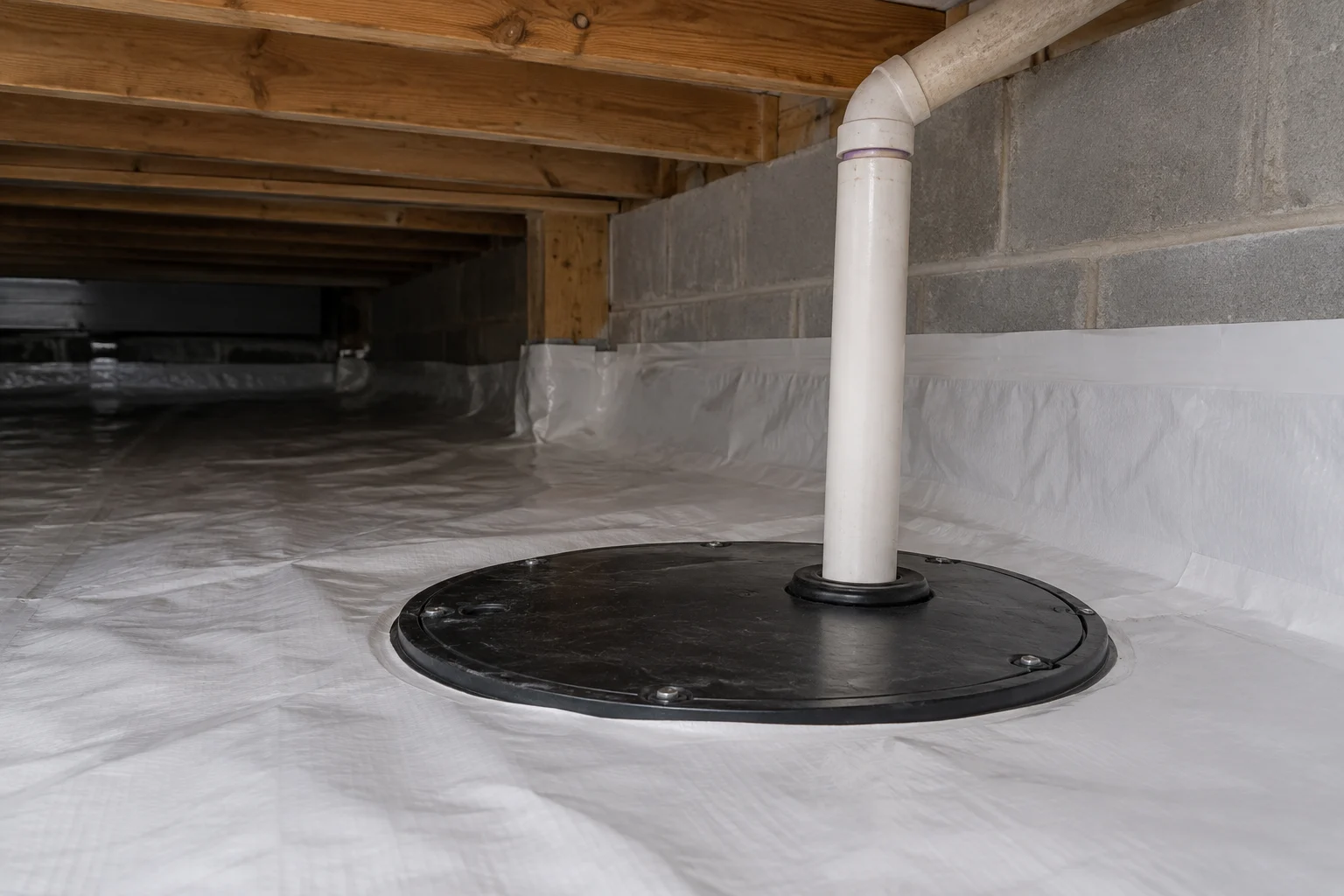
A pump needs a connected collection system
The basin collects water before the pump removes it. Position and drainage connections determine whether water can reach the basin from the affected areas. A pump placed in one low spot may leave another section disconnected.
For replacement work, review the existing basin, incoming drainage, float movement, power, and discharge before selecting a new pump. Frequent cycling, continuous operation, noise, and water returning after shutoff are different clues.
Choose flow at the required head
Head describes the resistance the pump works against, including vertical lift and friction in the discharge piping. A pump’s performance curve shows the flow it can deliver at different heads. Horsepower or maximum flow printed on a box does not establish installed capacity.
Discharge height, pipe size, route length, and fittings affect the operating point. The selected pump should be evaluated against that route and the expected incoming water, with manufacturer instructions governing the installation.
Coordinate the basin, float, and discharge
The basin must provide adequate space for the pump and unobstructed control movement. Its cover should work with the crawlspace enclosure while permitting service. Discharge connections, backflow control, and any anti-airlock provisions must match the selected equipment.
A serviceable arrangement allows the pump to be removed without dismantling unrelated work. The discharge route needs support and a suitable destination. Electrical requirements and any additional licensed trade work should be identified in the scope.
Understand what backup equipment protects against
A primary electric pump cannot operate during a power outage without an appropriate backup arrangement. A second pump, battery system, alarm, and remote notification each address different failure scenarios; one feature does not imply the others.
Backup performance depends on the equipment, water load, and available power. Ask what activates the backup, how its operation is checked, and what maintenance it needs. No runtime should be promised without the relevant system information.
Test a complete operating cycle
A completion check should introduce water as appropriate to observe automatic start, drawdown, shutoff, and discharge. Check for leaks, restricted float movement, and abnormal return flow. Test any specified backup or alarm according to its instructions.
Keep the basin and controls accessible. Periodic checks matter before wet weather and after work that could disturb the discharge. The handoff should identify the installed model, controls, electrical supply, and maintenance responsibilities.
COMMON QUESTIONS
Technical questions, explained.
Does a larger pump always improve drainage?
No. An unsuitable basin, blocked intake, undersized discharge, or disconnected collection path can limit the system. Capacity needs to fit the installed layout rather than replace an assessment.
Why does the pump turn on and off repeatedly?
Possible causes include a small effective basin volume, returning water, control settings, or an ongoing high inflow. The cycling pattern should be evaluated with the basin and discharge arrangement.
Is an alarm a backup pump?
No. An alarm reports a condition; a backup pump moves water. A remote alert also depends on its communications and power arrangements. Confirm each feature separately.
Can the existing discharge stay?
It may, if its condition, diameter, routing, and outlet suit the replacement system. Reusing a line should be a documented decision, not an assumption based only on whether it connects.