
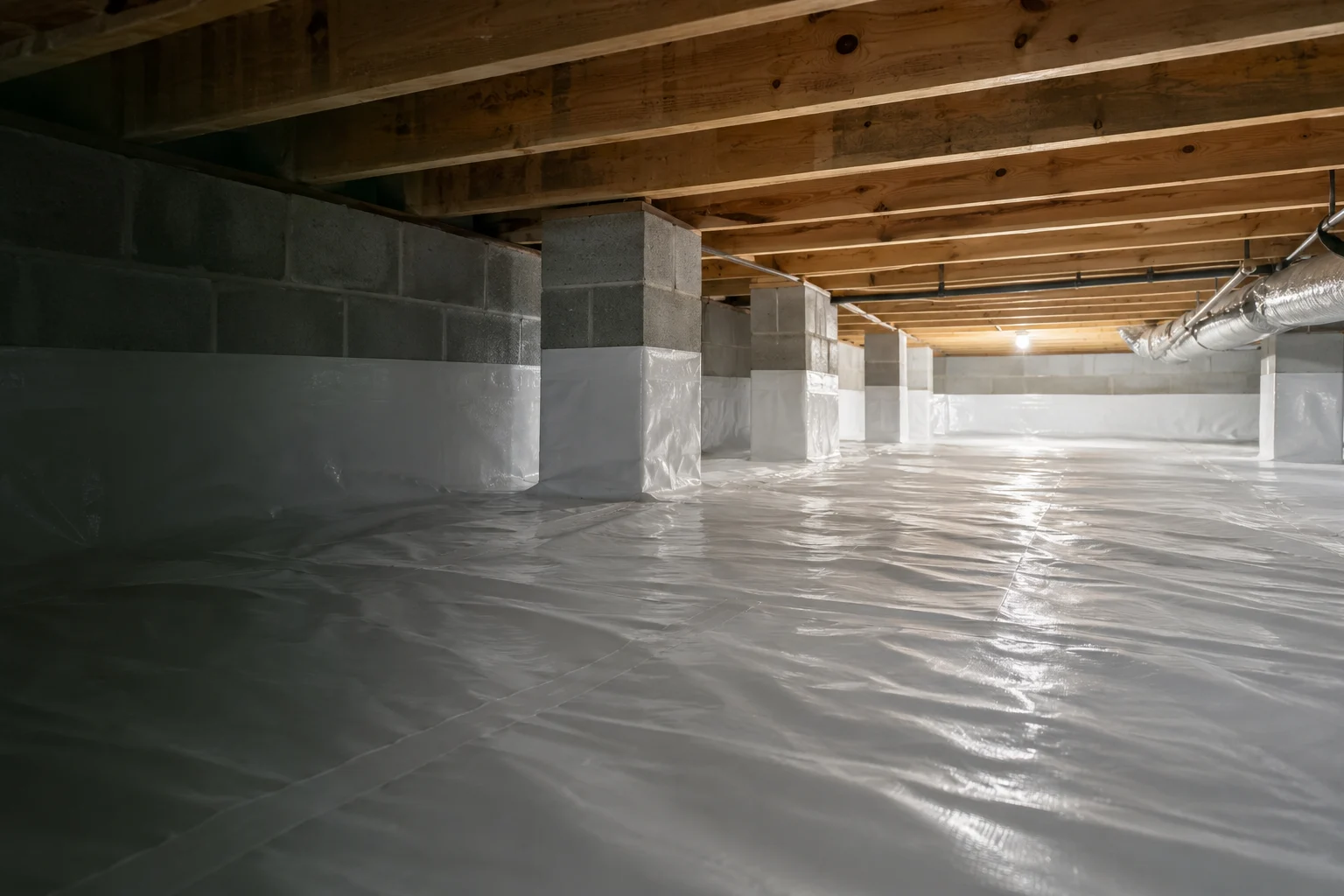
Enclose the space with a purpose.
A dirt-floor crawlspace can have several moisture paths at once. An incomplete ground liner, humid outside air, plumbing leaks, and water after a storm call for different responses. Encapsulation begins with understanding those conditions instead of simply covering them.
What happens before the liner goes down?
We look at the ground, foundation walls, access points, existing insulation, and available working space. The proposed assembly brings the ground liner, seams, wall details, penetrations, and access closure together. Drainage and humidity control belong in the same conversation when the conditions call for them.
The plan should explain how equipment and plumbing remain accessible. Existing water problems and damaged materials need a defined response before the space is closed in.
What affects the quote?
Crawlspace size, clearance, debris removal, water conditions, and the selected liner affect the scope. We separate preparation, enclosure, drainage, and equipment in the proposal so you can see what each part addresses.
COMMON QUESTIONS
Clear answers before you commit.
Is encapsulation the same as a vapor barrier?
A ground vapor barrier is one part of moisture control. Encapsulation treats the crawlspace as a coordinated enclosure and may include wall details, air sealing, and mechanical humidity control.
Will the liner stop standing water?
A liner does not replace a plan for bulk water. We consider drainage and discharge separately when water is entering or collecting in the space.
What do you need from me to get started?
Your name, phone number, and city are enough for the first inquiry. If you have photos or know when the issue appears, you can add that information. You do not need to enter the crawlspace to request a conversation.
How long will the work take?
Access, preparation, the extent of the work, and any related repairs affect the schedule. Timing is discussed after the scope is understood; submitting a form does not reserve an installation date.