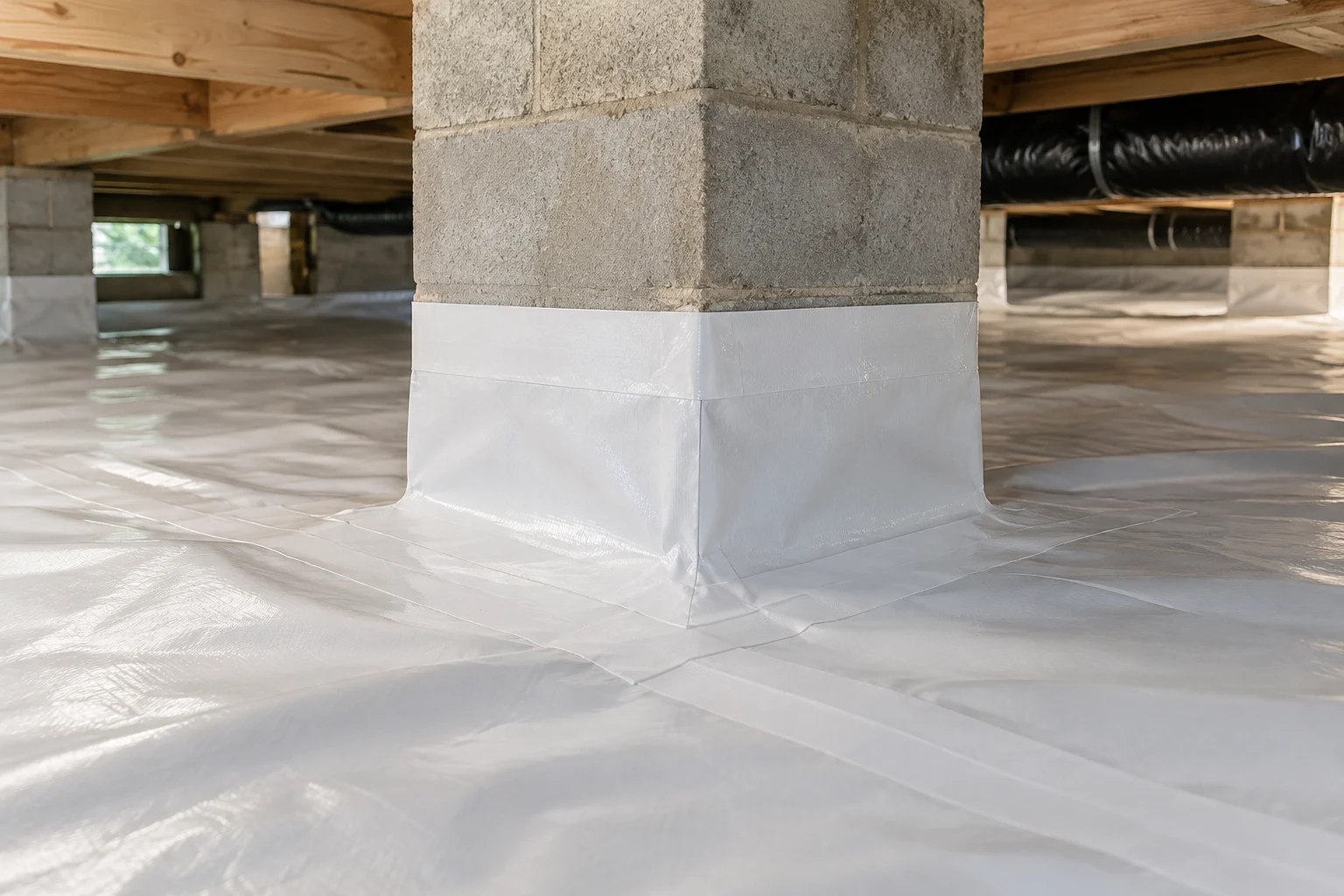
A useful starting point for exposed soil.
Bare soil, torn plastic, and loose sections leave a crawlspace ground barrier incomplete. A liner project can be a practical, defined scope when the existing space does not need every component of a full encapsulation.
Coverage is more than a roll of plastic.
The first questions are what is already on the ground, how much preparation is needed, and how the liner will fit around piers and penetrations. Coverage and seam details matter as much as the material itself. We also consider how future service visits will move through the space.
If there is standing water, that condition needs its own plan. Covering it with new material would leave the underlying issue unresolved.
What affects the quote?
Material selection, crawlspace clearance, ground condition, and removal of the old liner shape the price. A proposal should state whether it covers the ground only or includes wall and enclosure details.
COMMON QUESTIONS
Clear answers before you commit.
Can you replace only a damaged section?
That depends on the condition and compatibility of the existing liner. A localized repair can be considered when the surrounding material and seams remain serviceable.
Do I need encapsulation instead?
We compare the moisture conditions and your goals. A ground barrier and a complete enclosure solve overlapping but different parts of the problem.
What do you need from me to get started?
Your name, phone number, and city are enough for the first inquiry. If you have photos or know when the issue appears, you can add that information. You do not need to enter the crawlspace to request a conversation.
How long will the work take?
Access, preparation, the extent of the work, and any related repairs affect the schedule. Timing is discussed after the scope is understood; submitting a form does not reserve an installation date.